
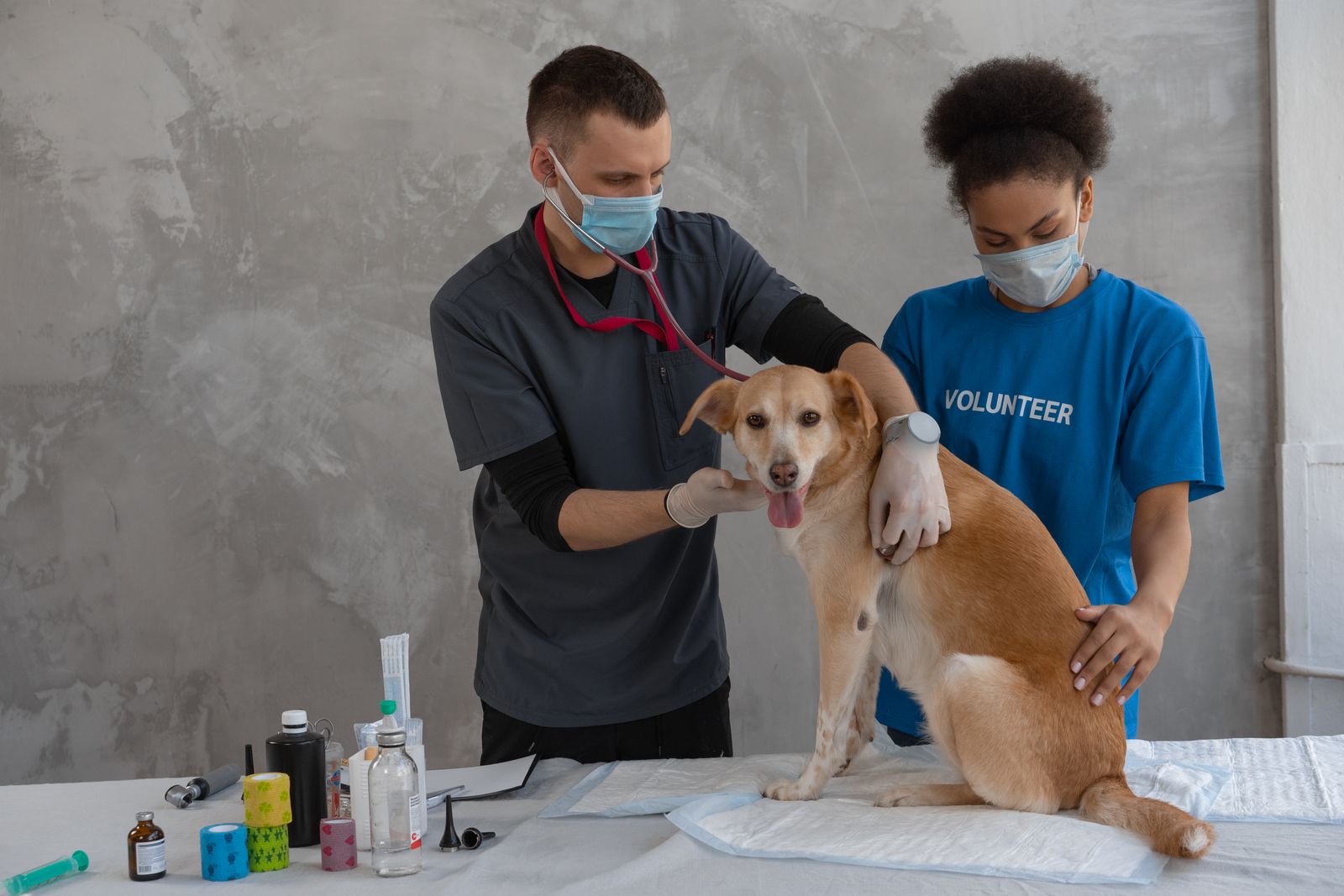
Veterinary Consultation
A careful examination, a clear explanation and a treatment plan built around your pet — never a rushed guess.
Learn moreMecco care
Imaging turns a suspicion into a clear picture. It helps us find fractures, foreign bodies, growths and internal changes that cannot be felt by hand.

1 / 6
What to expect
A physical examination can tell us a great deal, but it cannot show us a broken bone inside a swollen leg, a swallowed toy sitting in the gut, or the shape of the liver and kidneys. Imaging does exactly that, and it often turns a vague suspicion into a clear, treatable diagnosis.
It is also used before surgery, so we know what we are dealing with before the first incision rather than discovering it partway through. Good imaging makes operations shorter, safer and better planned.
Most imaging needs no special preparation. For some abdominal studies we may ask you to withhold food for a few hours, and for X-rays of anxious or painful patients we may use a light sedative so the image is clear and your pet is not distressed.
Your pet is gently positioned on the table or laid on a soft surface. We use safe handling, minimal restraint and, wherever possible, allow you to stay nearby for reassurance.
X-rays are taken in seconds. Ultrasound uses a probe and gel against the skin and is painless; it takes a little longer because we examine organs in real time, watching how they move.
We study the images and explain what we see, showing you the key views where that helps the plan make sense.
Imaging rarely stands alone — we combine it with the examination and any laboratory results to decide on treatment, monitoring or referral.

X-rays are excellent for bone and joint problems and for finding swallowed objects such as bones, stones or metal. They also give a clear view of the chest and the overall outline of the abdomen.
Ultrasound shows the shape and movement of soft organs — liver, kidneys, bladder, spleen and heart — and is invaluable during pregnancy and in abdominal pain. The two techniques often complement each other, and we will use whichever, or both, answers the question in front of us.
There is usually nothing to recover from after plain imaging. If a sedative was used, your pet may be a little sleepy for a few hours; we will tell you when they can eat and drink normally again.
Our in-house imaging has limits. Advanced techniques such as CT, MRI or specialist cardiac scanning require equipment we do not hold, and some subtle findings need an experienced radiologist to review. When that is the case, we will refer you to a trusted centre and send your pet’s history and images with you, rather than offering a less certain answer.
Related care
A careful examination, a clear explanation and a treatment plan built around your pet — never a rushed guess.
Learn more
Vaccination, deworming, parasite control and wellness checks that keep pets healthy — not just treated when they are ill.
Learn more
Spaying, neutering and soft tissue procedures performed with careful anaesthesia, sterile technique and close monitoring.
Learn moreReady when you are
Book a consultation and we will assess your pet and explain the options clearly.