

Dogs
Puppy Vaccination: A Complete Guide for New Owners
What to vaccinate, when to start, and why a single injection is never enough to protect a growing puppy.
Read articleDogs
Bad breath is not normal — it is often the first sign of a painful, treatable problem in your dog’s mouth.

Dogs are remarkably good at hiding mouth pain. A toothache does not stop most dogs eating; they simply adapt, chewing on the other side, swallowing food whole, or becoming a little slower at mealtimes. By the time owners notice obvious signs, tartar and gum disease are often well established.
Dental disease usually begins with plaque, a soft film of bacteria that forms daily on the teeth. If it is not removed, plaque hardens into tartar, which irritates the gums and provides a surface for more bacteria to grow. The gums become inflamed — a condition called gingivitis — and, if untreated, the infection spreads to the tissues and bone that hold the teeth in place.
This is a progressive process. It does not reverse on its own, and it becomes more painful and harder to treat the longer it is left.
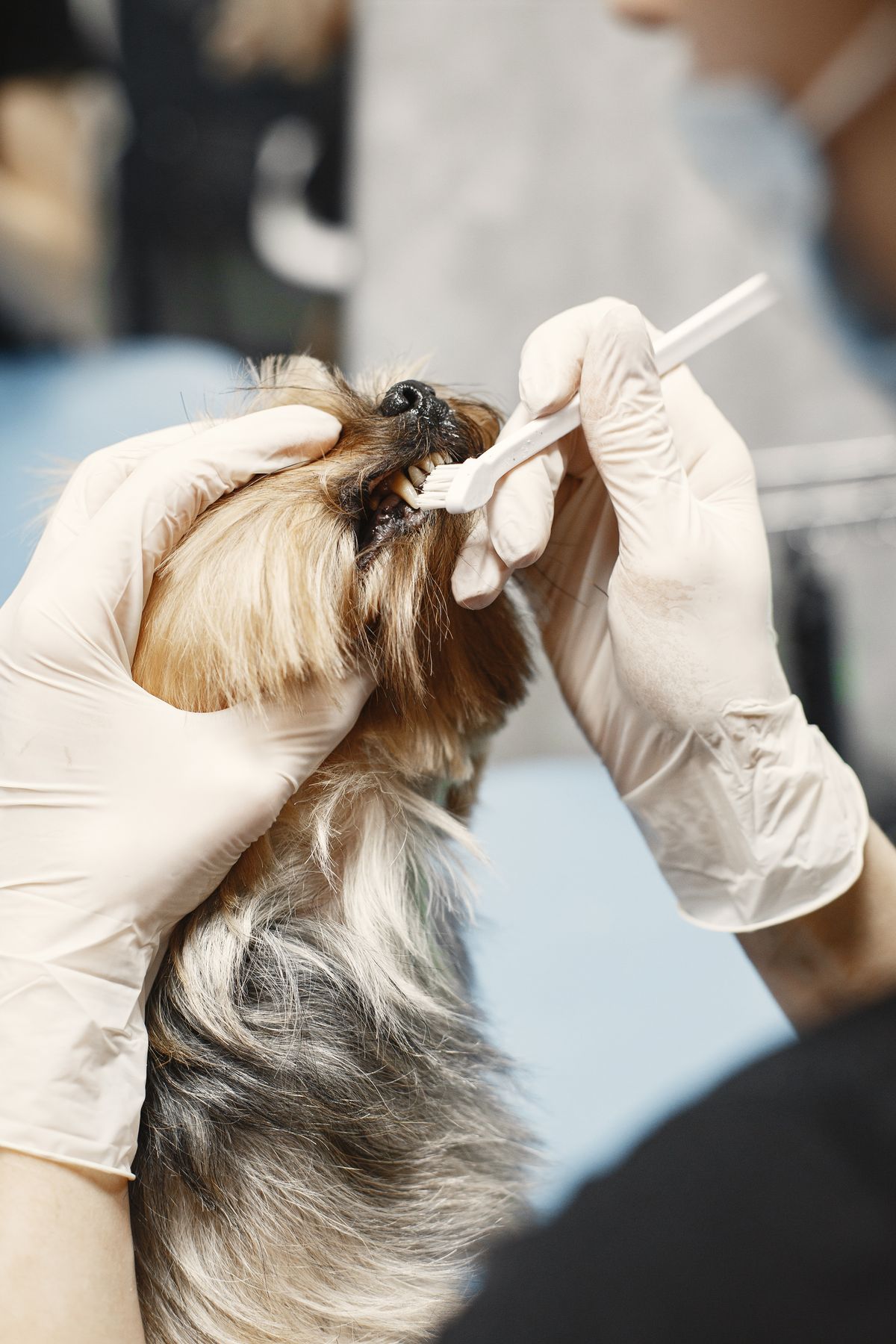
Some signs are obvious; others are easily mistaken for normal ageing.
The mouth is a direct route into the body. When gums are inflamed and infected, bacteria can enter the bloodstream and travel to the heart, liver and kidneys, where they can cause or worsen disease. Chronic dental infection also places ongoing strain on the immune system.
This is why we treat dental disease as a whole-body concern, not a cosmetic one. A clean, comfortable mouth supports better eating, better sleep and, in many dogs, a noticeably brighter temperament. Owners often tell us their dog seems younger after treatment.
Pain is also easy to underestimate. Animals in chronic discomfort rarely cry out; they simply cope. Relieving that hidden pain is one of the most rewarding parts of dental care.
Begin by letting your dog taste pet-safe toothpaste from your finger. Reward calm behaviour at every stage.
Use a soft pet toothbrush or a finger brush. Lift the lip gently and brush a few teeth at first, then build up.
Plaque forms within a day, so daily brushing is far more effective than an occasional effort. Work along the gumline, where trouble starts.
Dental chews and veterinary dental diets can help, but they support brushing rather than replace it.
Look for tartar, redness, broken teeth and changes in smell, and note anything unusual to tell us.
Some problems cannot be managed at home. When tartar and infection are advanced, a professional scale and polish — performed under general anaesthesia — is the only way to clean above and below the gumline properly and to examine each tooth.
Under anaesthesia we can assess the whole mouth safely, take dental X-rays where needed, and remove teeth that cannot be saved. Modern anaesthesia and pain relief make this a comfortable, low-risk procedure for most dogs, and we tailor the plan to your dog’s age and health.
We will tell you honestly what we find, what must be done and what can wait, then help you keep the mouth healthy in the months that follow.
Book a dental assessment if you notice bad breath, red or bleeding gums, tartar, drooling, dropping food, or any reluctance to eat or have the mouth touched. Do not wait for your dog to stop eating — by then, the disease is often advanced.
If a tooth is broken, loose or clearly painful, contact us promptly. Dental pain is genuine pain, and it is one of the few things we can usually fix decisively.

Keep reading
What to vaccinate, when to start, and why a single injection is never enough to protect a growing puppy.
Read article
Ticks are more than a nuisance — in coastal Tanzania they carry real diseases. Here is how to protect your dog.
Read article
Itching, hair loss and redness have many causes. Finding the right one is the key to lasting relief.
Read articleMecco Veterinary Clinic
Book an appointment or reach us in an emergency — we are here to help.