

Dogs
Puppy Vaccination: A Complete Guide for New Owners
What to vaccinate, when to start, and why a single injection is never enough to protect a growing puppy.
Read articleDogs
Eye problems can worsen within hours. Recognising the signs early can save your dog’s sight.
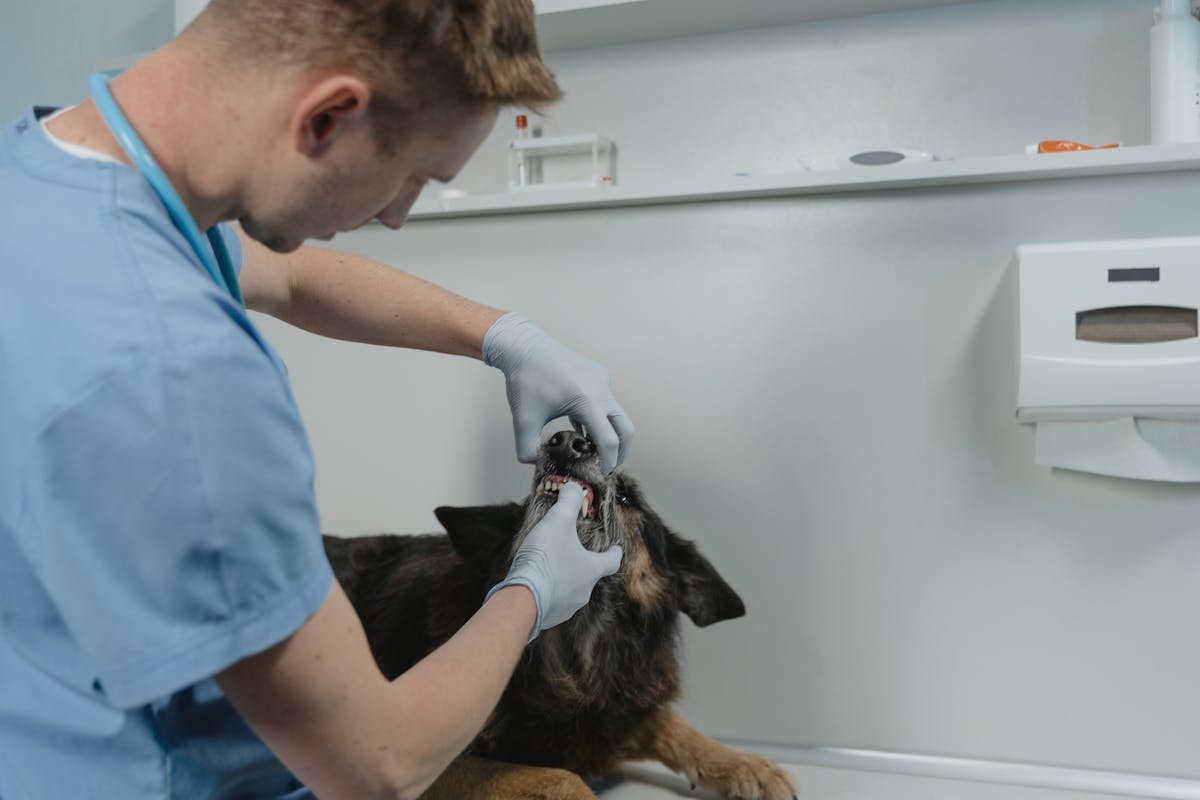
A dog’s eye is a small, finely balanced structure, and problems that would be minor elsewhere can become serious quickly. The cornea — the clear front surface — has little protection once it is damaged, and conditions such as ulcers and glaucoma can progress within hours.
Dogs cannot tell us their eye hurts. Instead, they show it through behaviour: squinting, holding the eye closed, avoiding bright light, rubbing the face along the floor, or shying away from being touched. These signs are easy to miss in a busy household, but they matter.
In eye disease, time is vision. What is a straightforward problem today can become an emergency — or an irreversible loss of sight — if it is left until tomorrow.
Some of these are obvious, others subtle. Any sudden change in an eye should be taken seriously.
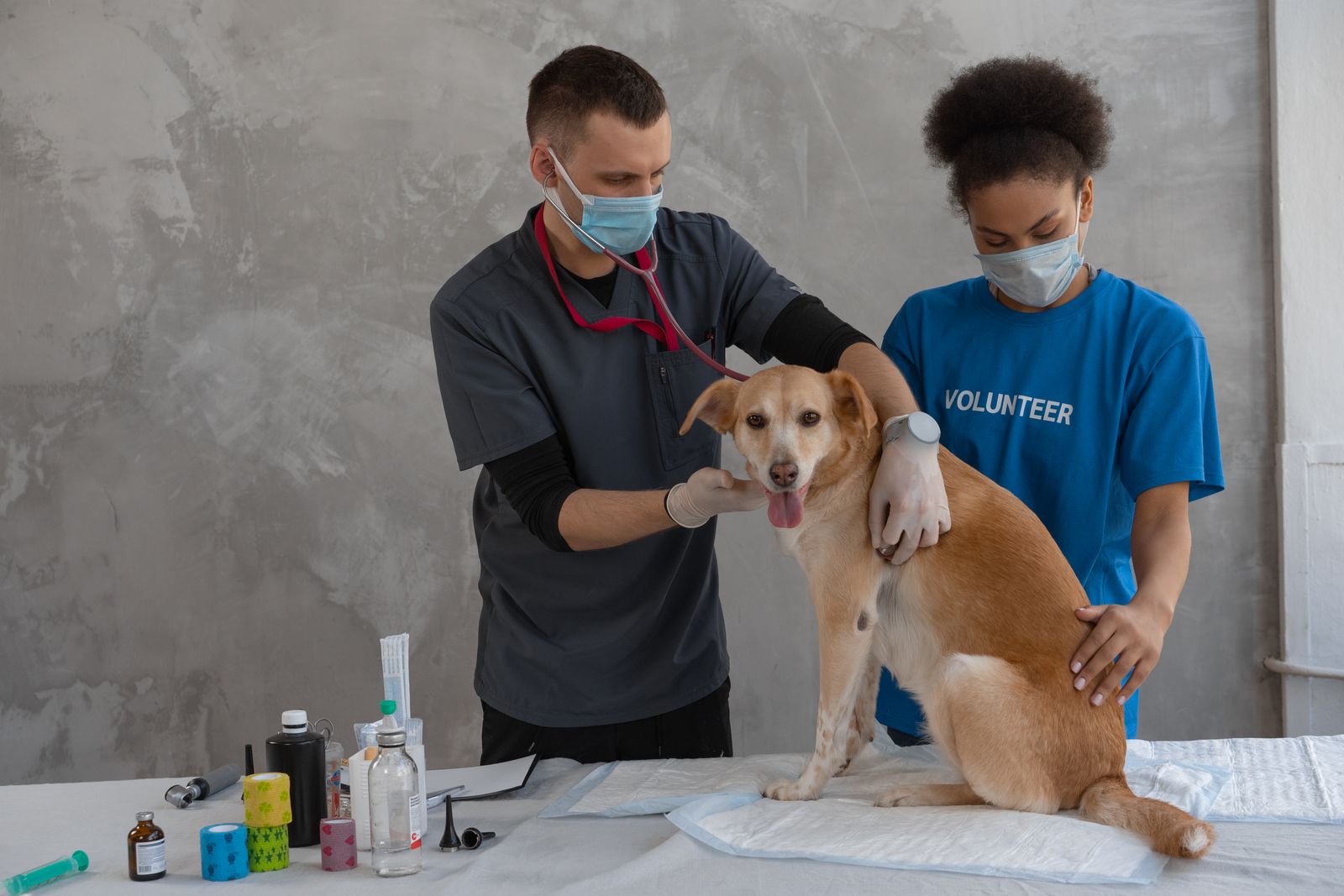
A corneal ulcer — a scratch or erosion of the clear surface — is painful and can deepen rapidly. Glaucoma, a build-up of pressure inside the eye, is intensely painful and can destroy the optic nerve within days if it is not controlled. Sudden inflammation inside the eye can threaten sight just as quickly.
There are also conditions that reflect disease elsewhere. Dry eye, for example, often has an immune cause, and a cloudy lens may signal diabetes. Treating the eye in isolation may miss the bigger picture.
Because the eye is so compact, the difference between a minor problem and a serious one is often invisible without special tests. An eye that is clearly uncomfortable is an urgent problem, not one to “wait and see”.
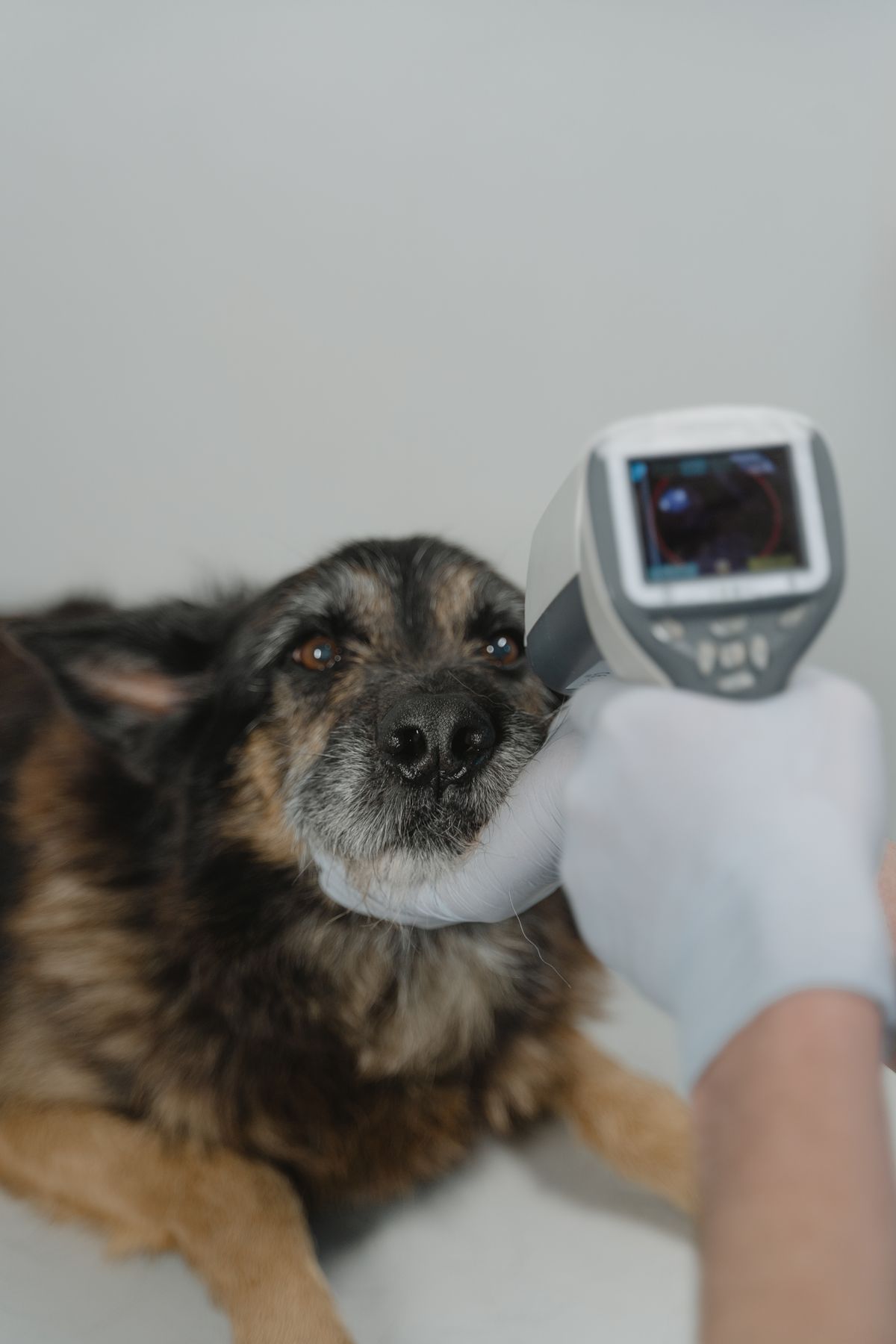
We start by examining the eye and the structures around it in a dim room, often using a bright, focused light and a magnifier. We assess the eyelids, the tear film, the cornea, the pupil and the inside of the eye as far as we can see.
Where needed, we place a harmless orange dye on the surface to reveal scratches and ulcers, and measure the pressure inside the eye to check for glaucoma. Tear production can be measured too. These tests are quick and usually well tolerated.
The findings determine the treatment: whether it is lubricants, antibiotics, pressure-lowering medication or something more. Sometimes referral for specialist imaging or surgery is the best route, and we will tell you honestly if that is the case.
Eyes are easy to harm with good intentions, so please avoid these common mistakes.
Contact us the same day if your dog is squinting, holding an eye closed, or has a red or cloudy eye or any discharge. Sudden blindness, a bulging eye, or an eye that is clearly very painful should be treated as an emergency.
Please do not self-treat. Contact us before putting anything into your dog’s eye. Eye conditions often need very specific treatment, and the wrong preparation can make matters worse.
A prompt, thorough examination is the safest way to protect both your dog’s comfort and its sight.
Keep reading
What to vaccinate, when to start, and why a single injection is never enough to protect a growing puppy.
Read articleTicks are more than a nuisance — in coastal Tanzania they carry real diseases. Here is how to protect your dog.
Read article
Itching, hair loss and redness have many causes. Finding the right one is the key to lasting relief.
Read articleMecco Veterinary Clinic
Book an appointment or reach us in an emergency — we are here to help.